
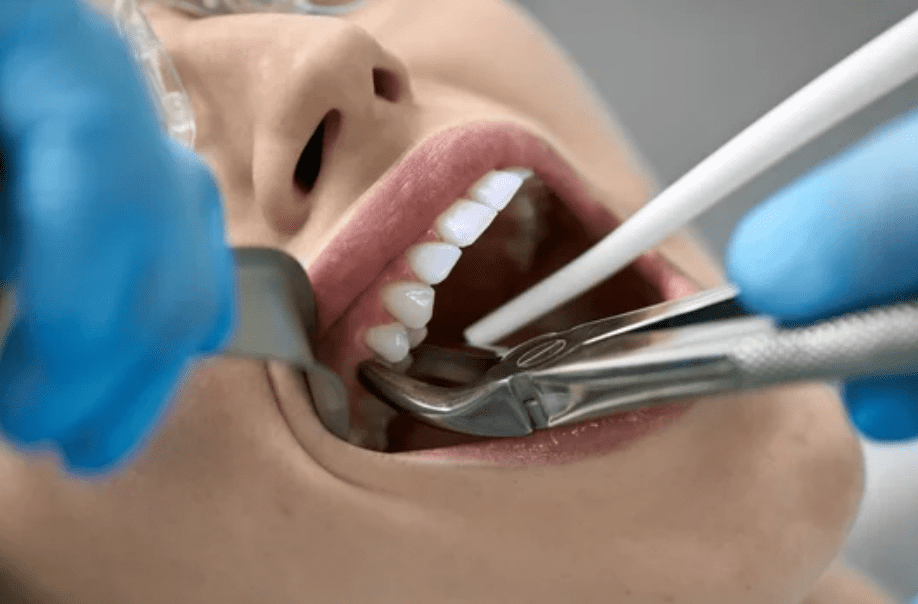
A tooth extraction is when a dental team removes a tooth from your jaw. Dental professionals can surgically extract the tooth, or they can pull it. While you may not find it fun, you won’t feel any pain during the procedure. Thanks to sedatives and anesthetics, the extraction procedure is relatively painless. You will feel soreness and discomfort during your recovery. However, you should never experience any severe or excruciating pain. If you do, you should contact your dentist immediately.
There are a number of reasons why your dentist may have chosen to extract a tooth. If you have an infected tooth, your dentist may decide to remove your tooth, especially if antibiotics haven’t worked. Infections can be serious. Without treatment, infections will spread. An impacted tooth, such as a wisdom tooth, is another reason for extraction. A wisdom tooth is the third set of molars that erupts from your gums. Many people don’t have enough space for these teeth. This means that they must come out. An impacted tooth is a tooth that has grown incorrectly. Impacted teeth will affect other teeth without removal.
Dentists typically use tooth extraction as a last resort. It is best to keep your natural teeth if it is possible. If you need an extraction, it is for a good reason. You won’t feel any pain during the procedure. However, you may experience some discomfort as you recover. Therefore, preparing for recovery before the procedure is best to minimize discomfort.
Recovery Tips
You should be able to return to work or school within a few days following your procedure. However, you should continue to take it easy as much as possible. Avoiding intense or strenuous activity is essential for recovery. The recovery process can take a few weeks. A surgical extraction may take longer. However, it depends on your situation.
Medications
One of the best ways to avoid pain after surgery is to take all your medications as directed. Your dentist may prescribe pain relievers and antibiotics to aid in your recovery. It is important to take antibiotics to avoid infection after your surgery. Some patients do not wish to take the prescription pain-relievers. So, you can take over-the-counter medication too. For example, ibuprofen can reduce pain and swelling during recovery.
Keep It Clean
It is vital to keep your extraction site clean after your procedure. Remember: it is an open wound inside your mouth. Your mouth is full of bacteria that can cause infection. In addition, as you eat, you can leave food particles at your extraction site, which can cause an infection. This can also slow your healing process.
Ice
Another way to support your recovery is to ice your cheek on the side of your face where the extraction was. The ice will help to reduce the pain and swelling. Also, ice can help slow and stop blood flow. Therefore, ice will help minimize swelling. Also, ice can aid your healing process and speed.